
At our first meeting couples always ask the same things: what does it look like, will you tell us what to do, where will you stand. Here is the answer, in the order the day actually happens.
Before the wedding: coffee and a questionnaire
Before we meet at your wedding, we meet over coffee. Not to plan shots, but to understand who you are: who matters to you, what worries you, what should be in the film and what should not.
Two weeks before the wedding I send you a questionnaire. In it you answer my questions: the schedule of the day, addresses, contacts for the photographer and the venue, the people I should pay attention to. From this I build the plan for the day. That way I do not have to ask about anything at the wedding, I just film.
Getting ready: this is where the film begins
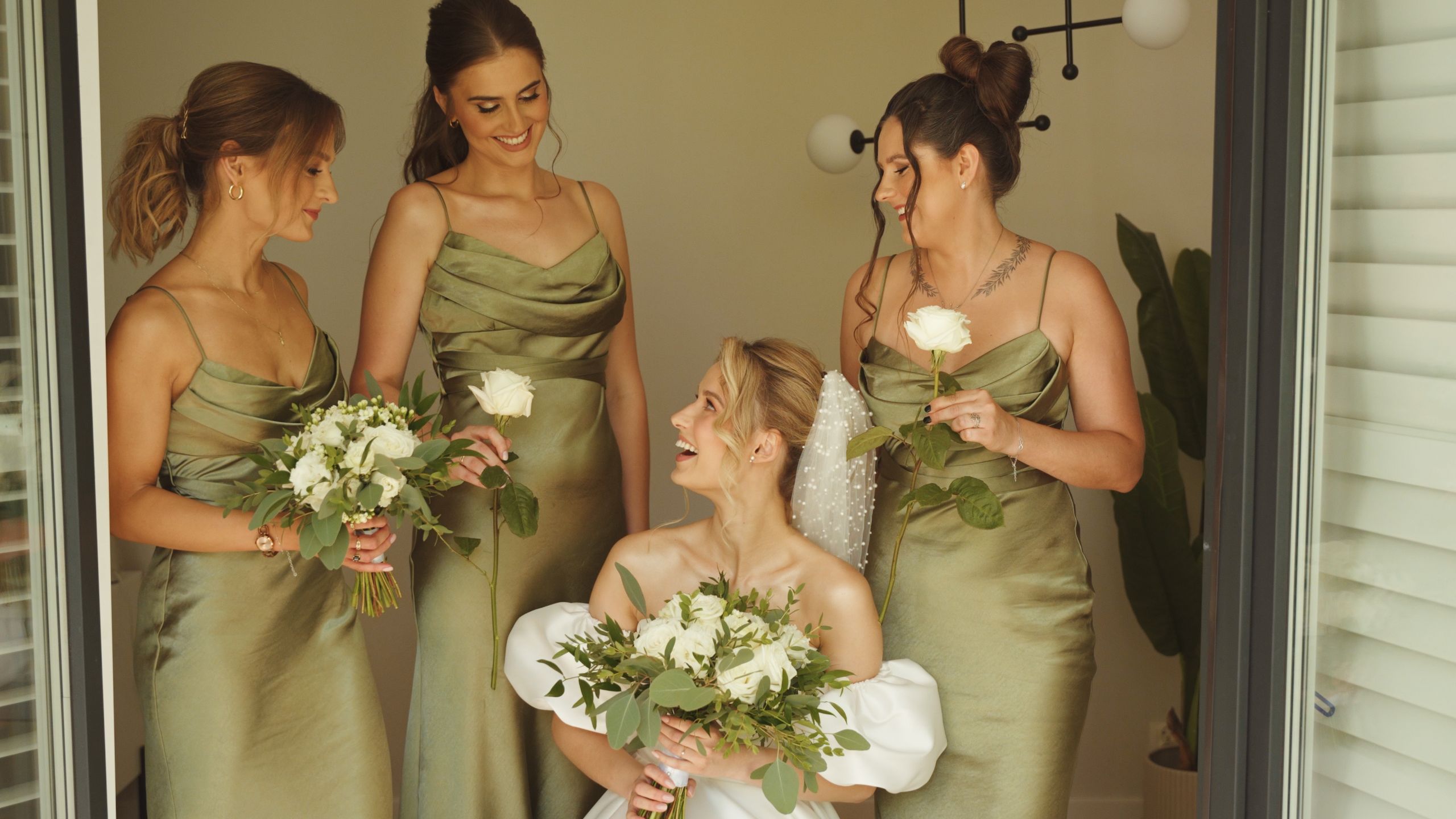
Getting ready is the most underrated part of the day, and in the film it is usually the first two minutes. I do not stage scenes. If your mum is buttoning up the dress, I film your mum buttoning up the dress. If the best man is looking for his tie, that stays in too.
The only thing I ask for: please keep the curtains open. Natural light does more than any lamp.
The ceremony: I am there, but you do not see me
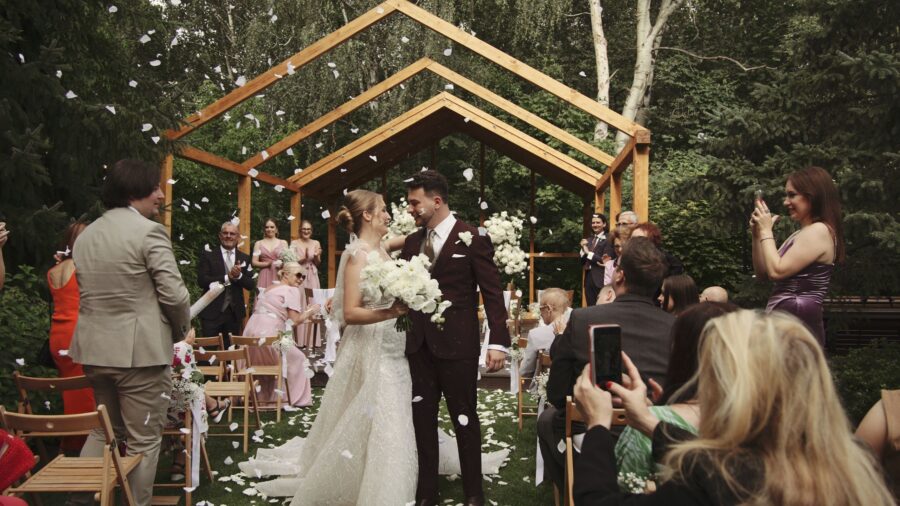
Church, registry office or an outdoor humanist ceremony – the rule is the same. I agree with the officiant where I can stand and I do not move more than I have to. I record sound separately, so your vows sound clear and not like an echo in a hall.
The drone flies only where it is allowed and only when it does not disturb anyone. A flight over an outdoor ceremony, yes. Over a church in the middle of a city, no.
The couple session: the only moment I direct
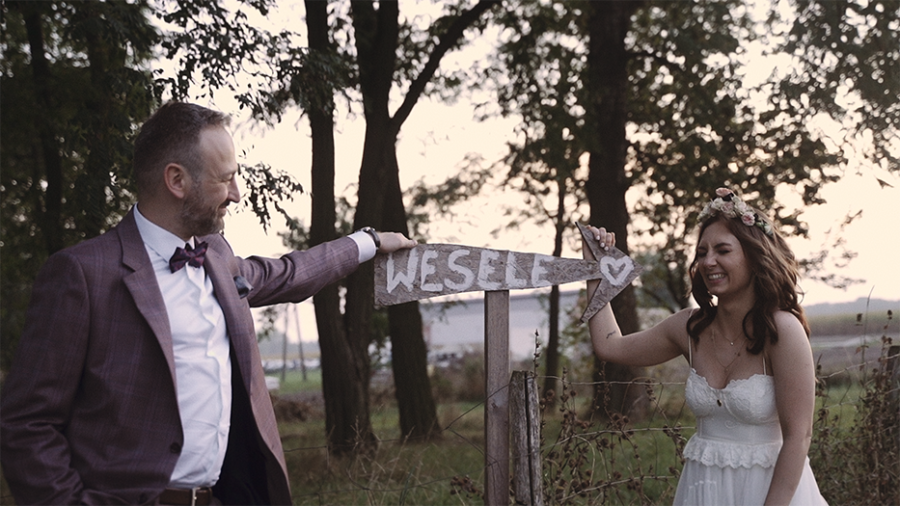
The couple session is the only part of the day when I tell you where to stand. I ask for repeats, I say where to walk and where to stop. That is on purpose: the wedding coverage should be real, but a few shots from the session should simply be beautiful. I do not need forced posing. The best shots still happen when you forget about me for a moment.
The reception: first dance, cake, oczepiny and everything in between
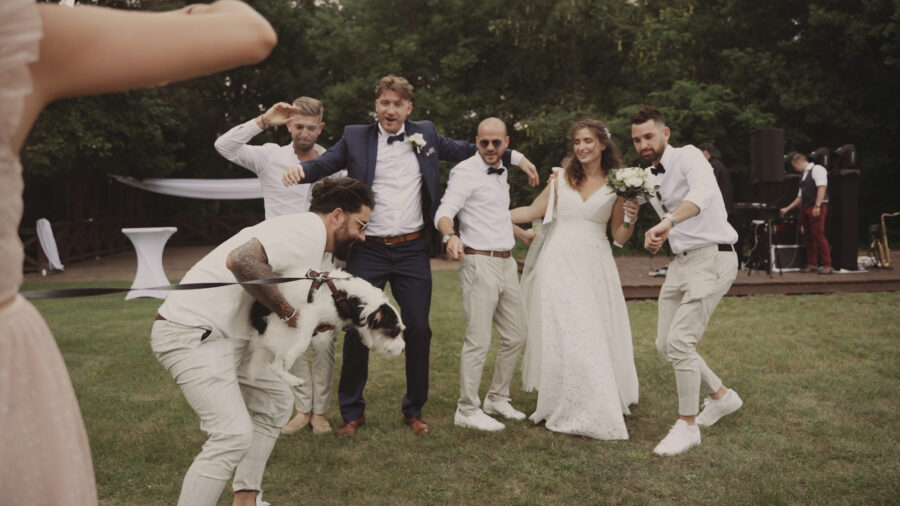
I stay at the reception until about midnight. I film what actually happens, not what should happen according to the script. I do not stop a toast to repeat a shot. I do not ask guests to wave at the camera.
Two things worth planning with the film in mind:
- the first dance before it gets completely dark, if the venue has a terrace or a garden,
- the cake and the oczepiny (traditional Polish wedding games) before midnight, so they fit within my working hours.
Alone or with a second operator?
Usually I come alone. One person with a camera draws less attention, and after an hour you stop noticing it. At bigger weddings I bring a second operator – then one of us stays with you and the other with the guests.
After the wedding: 7 months of work
I leave with several hours of footage. Over the following months it becomes a wedding film in the length you chose, a highlight film and a reel. You get all of the raw footage. I will write separately about what happens during that time.
What you will not get from me
- staged scenes at the reception or in church,
- a light on the camera shining in your guests’ faces,
- a film in which everyone looks the same as at every other wedding.
Want to see how it works in practice?
Watch selected films, read what couples say or write to me with your date and venue.